


Setting the Example in Animal Welfare
100k+
Pets Sterilized
600k+
Prevented Litters
Before Surgery Instructions
Dogs over 5lbs should NOT be fed breakfast the morning of surgery. Dogs under 5lbs SHOULD be given a quarter (1/4) of the amount of food normally given as a small snack in the
morning before 6:00am prior to arriving at the clinic. Water is ok prior to surgery for all. Cats should NOT be fasted prior to surgery. Please feed your cat normally the morning of surgery making sure
food and water are available at all times with the last meal the morning of surgery given no later than 6:00am.
If your pet is in need of grooming, you may want to have it done before hand they will not be able to have a bath for 14 days after surgery.
Do not bathe your pet 24 hours prior to surgery, as it lowers your pets body temperature which is unsafe during surgery.
Do not apply any topical flea medications 48 hours prior to surgery.
Discuss any medications, either prescribed or over the counter, that your pet is currently on prior to your appointment.
Your pet should not be on any antibiotics or steroids prior to surgery. If your pet is currently on any medications like this, please call the clinic to reschedule your appointment.
If your pet has had any vomiting, diarrhea, or hospital visits prior to surgery, please call the clinic to discuss rescheduling.
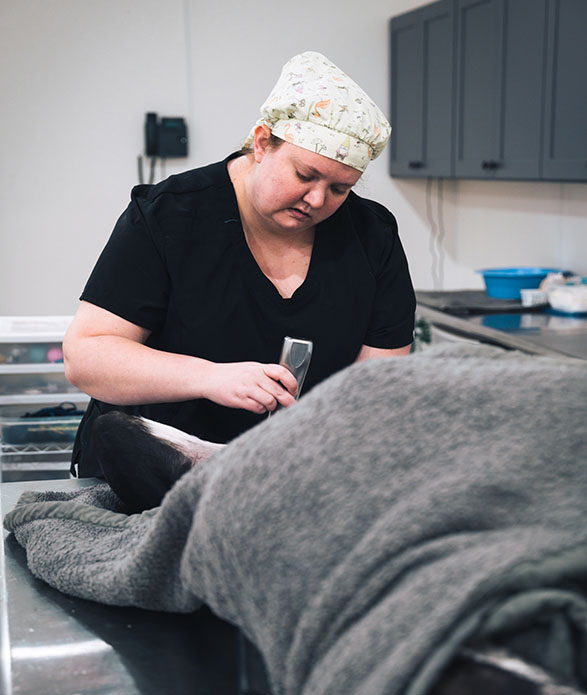
After Surgery Instructions
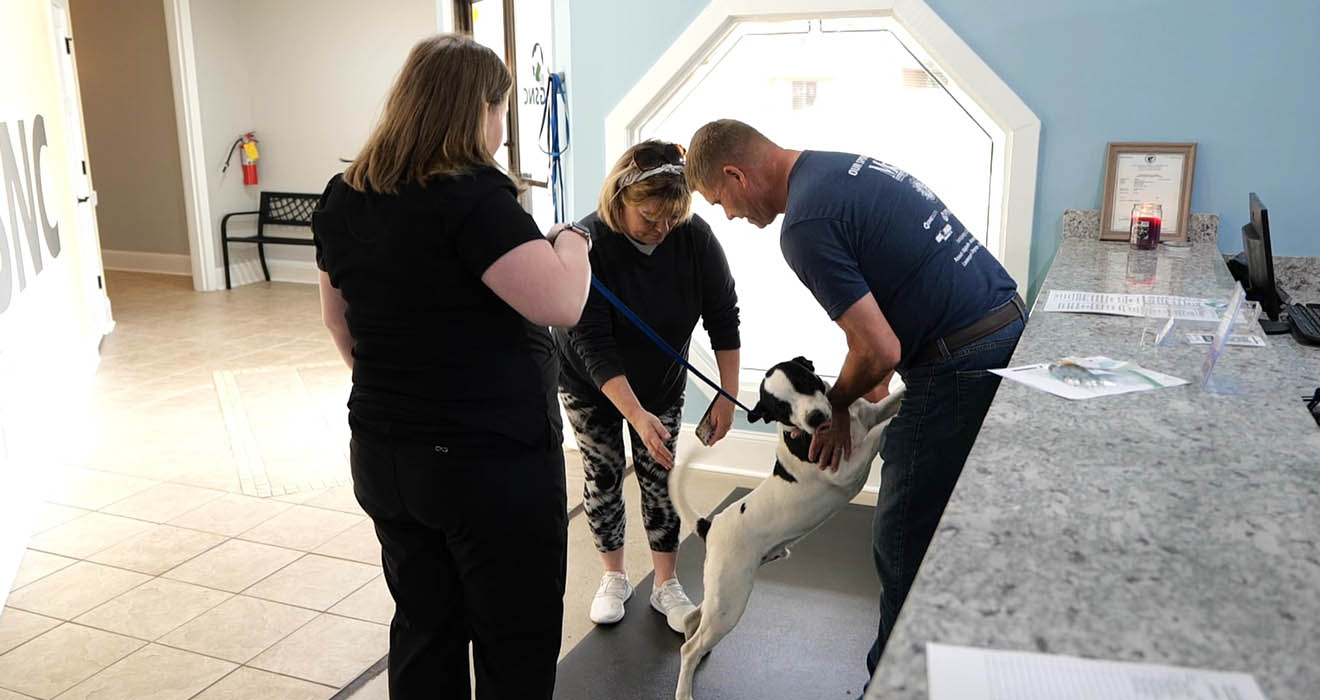
Your pet has had major surgery that requires general anesthesia. What to expect when you get your pet home:
WGSNC does not recommend transporting any surgery patient on the outside/back of a car/truck, and is not responsible for any harm caused to that animal if transported that way.
It is imperative that ALL activity must be restricted for 14 days after surgery. No running, jumping, playing, swimming,
bathing, or any other strenuous activity for 14 days then please allow your pet to SLOWLY return to regular activity.
Check your pet’s incision site twice daily. Redness and swelling should be minimal.
Your pet was given a pain injection at the time of surgery that will last for 24 hours. Please read all prescription labels and
follow instructions for take home medications.
If your pet was in heat at the time of surgery, please keep her away from any intact males for at least 2 weeks.
The day of surgery around 6PM give ¼ - ½ of what your pet normally eats and drinks. Do not change your pet’s diet during
recovery unless instructed. Appetite should return gradually within 24 hours of surgery.g
Vomiting or lack of appetite is normal the day of surgery due to anesthesia. Lethargy, diarrhea, or vomiting lasting longer
than 24 hours is not normal, and your pet should be taken to your regular veterinarian.
Your pet received a green tattoo next to their incision as proof of sterilization. This tattoo is a scoring process in the skin; IT
IS NOT AN EXTRA INCISION. DO NOT TRY TO WASH IT OFF.
Sutures are internal and will dissolve on their own within 4-6 weeks. There is surgical skin glue on the outside. There is no
reason to return to the clinic to remove any sutures unless otherwise discussed with you at surgery discharge.
Do not apply any ointments, creams, cleaners, or disinfectants to the incision area. Do not cover up the pet’s incision with
clothes, bandages, or surgery suits.
If your pet received vaccines today, please monitor for signs of a vaccine reaction which include swelling of the
face or injection site, hives, vomiting, lethargy, fever, or difficulty breathing please see a full service or emergency
veterinarian IMMEDIATELY.
DOGS
Dogs must be crated during recovery for 14 days to restrict all activity. Jumping on beds/couches or walking around the
home could result in swelling or opening of the surgery site.
Dogs must be walked on a leash for 14 days for potty breaks.
E-collars must be kept on your pet for 14 days after surgery to prevent licking and chewing at the incision site. Do not cut
the e-collar. An inflatable or “donut” e-collar if your pet is having an issue with the e-collar sent home after surgery.
If your dog was pregnant or in heat, they may have small amounts of drainage/discharge from their vulva for up to 7-10
days. Large clots are not normal.
Sedatives can be refilled after the original prescription, please call our Nurse Line to talk to our surgical staff about any
issues you may be having with your dog.
Whimpering, crying, and shaking can be normal for the first 24 hours after surgery.
CATS
You may continue to use your regular cat litter, please check incision several times daily to ensure litter is not getting stuck
in incision site, if this occurs, please change litter to pellets, newspaper, or non-dusting/clumping litter.
We do not give e-collars to cats unless it is needed as they can lead to “alligator rolling” and added stress. If your cat is
grooming in the surgical area, a soft cone is recommended. These can be purchased online or at local pet stores.
We leave the scrotal sac of male cats open to help with drainage and swelling.
EMERGENCY
If there is an emergency outside of these hours or in the event the clinic is closed please contact your regular veterinarian
or your local emergency hospital.
WGSNC will treat at our clinic, at minimal cost, any post-op complications resulting directly from surgery, ONLY if the post-
operative instructions are followed in full. Your regular veterinarian must address illness or injuries that are not a direct
result of surgery.
We cannot be held responsible for complications resulting from failure to follow post-op instructions or for contagious
diseases for which the animal was not previously properly vaccinated.
Our veterinarians recommend that you establish a wellness program for your pet with a regular, full-service veterinarian.
By carefully following these instructions, you ensure a swift and painless recovery for your pet.





Ready to Help Save Lives? Give Today.
Your donation helps fund monthly specials, provide medications to those in need, fund the surgery cost to help prevent and eliminate pet overpopulation.
Donate Now